
Well, the title of this post says it all. Today was the first day shadowing at the hospital, and it was breathtaking. But before I go into the details, let me start at the beginning.
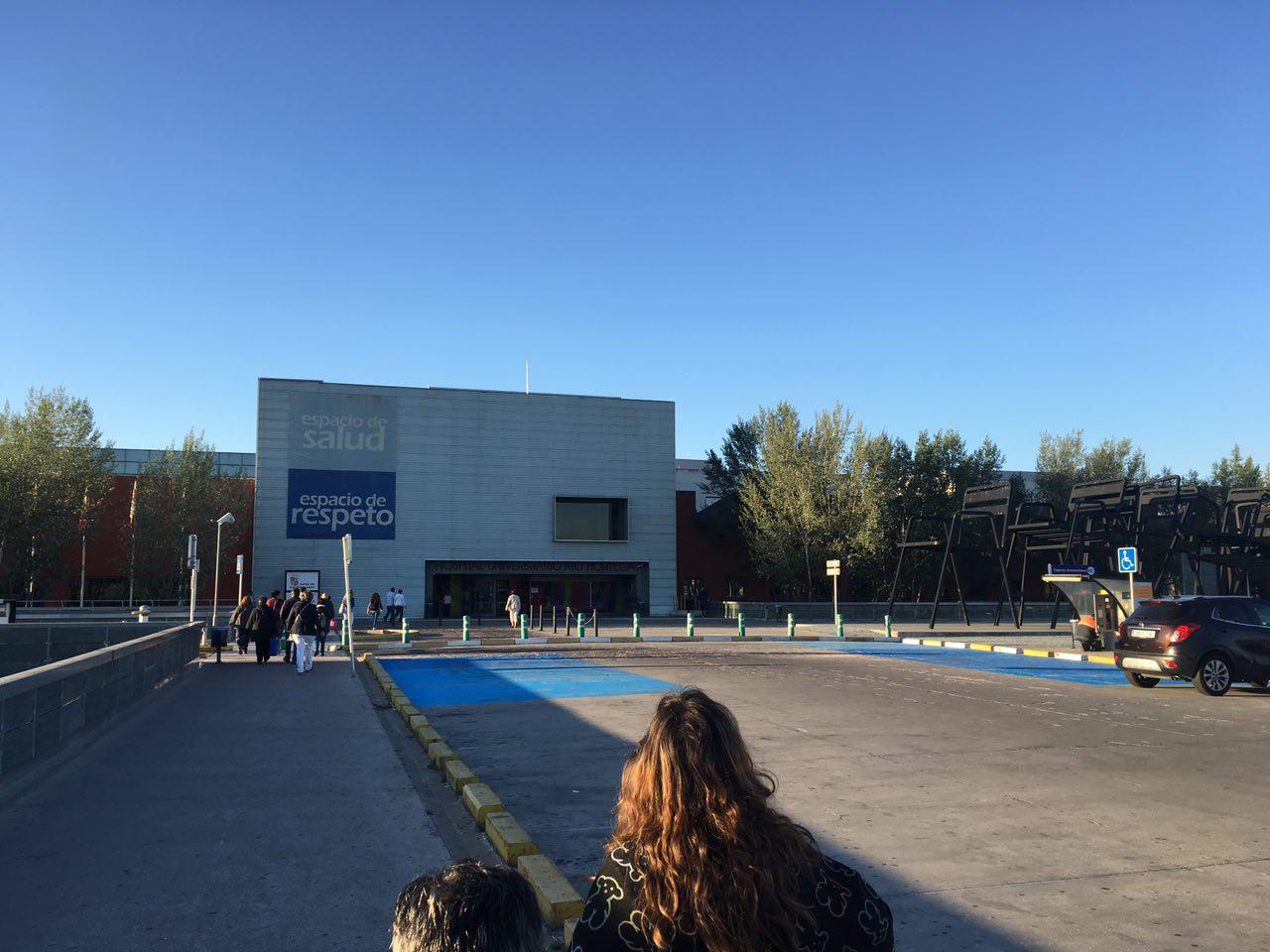
We woke up early (around 6:30) and took the bus to Hospital Universitario Río Hortega. The hospital is not built like a typical hospital: it has 4 separate buildings that are connected through bridges, with multiple specialties and 608 beds. Each pair of fellows was assigned a different weekly specialty, and I was assigned Urology. I’m not one to complain, but this honestly sounded a little boring. I kept a positive attitude though, and as Carla ushered me and Saman into the urology department, I was suddenly surrounded by about 15 different Spanish physicians in lab coats sitting at a conference table, looking at a projector screen at the front of the room. The head of the urology department, an older man of tall stature with dark gray hair, welcomed us and allowed us to sit in the back of the room and observe.
One thing I have begun to notice about Spaniards is that they talk very fast, very loud, and they talk over each other with no regard to what the other person is saying. This is how this meeting went: 15 doctors talking at full speed about each patient’s consultations, diagnoses, and treatment options. I tried my best to keep up with the rapid-fire Spanish, but I usually only caught about 60% of each sentence. But I loved it. The atmosphere of intelligent physicians and residents, young and old, all grouped together to find a solution for each patient’s diagnosis. I felt like I was watching a particularly spicy episode of Gray’s Anatomy, in Spanish.
The urologists informed us that they were performing a very important surgery today: the removal of an enlarged prostate gland. And they would be using the Da Vinci medical robot!!! For those of you who don’t know what I’m talking about, the Da Vinci robot is probably the most advanced medical device on the market currently. Only a few hospitals in the WORLD have one, and most hospitals in the United States don’t. I can’t take pictures while I’m in the hospital, but here is a picture from the internet so you know what it looks like:
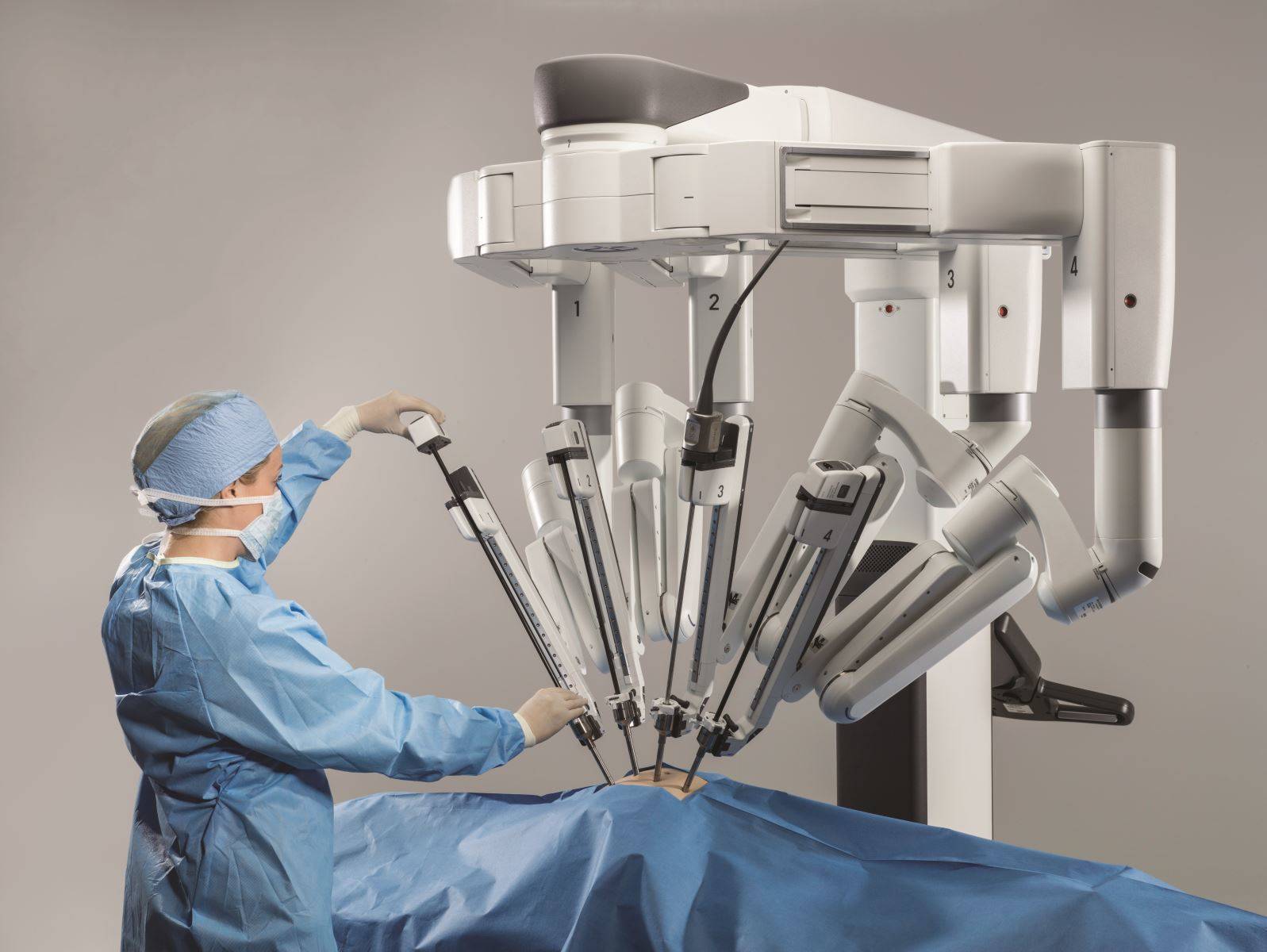
Saman and I changed into scrubs and entered the operating room, where the patient was already anesthetized on the table. The surgeons made 4 entrance points in the patient’s abdomen, using 4 trocars. A trocar is a surgical instrument with a three-sided cutting point enclosed in a tube. The way it works is the surgeons will enter the trocar with the cutting edge, and once it has penetrated the patient’s skin, they remove the sharp section leaving a tube acting as a “tunnel” into the abdomen. The surgeons then filled the abdominal cavity with air, and inserted the camera. The camera broadcasted to several TVs in the operating room, we watched intensely as the surgeons dissected out the seminal vesicles and the vas deferns.
The leading surgeon made 2 incisions during the surgery: one to clip the seminal vesicles and the vas deferns, and a second to remove the prostate. After the prostate was removed, the bladder had to be rejoined with the urethra by suture. The whole surgery took about 5 hours, but it was worth every second. The residents were incredibly nice and answered all our questions throughout the procedure. Who knew prostate surgery could be so incredible!
After changing back into our lab coats, we headed to the cafeteria where we would be participating in “English tutoring”: each fellow is assigned a physician at the hospital that has signed up to practice their English, and we get coffee with them and chat. My physician, Dr. Moya, greeted me in the lobby. She’s a pretty, thin woman of about 45 with dark wavy hair and a nice smile.
She was very shy when we started talking, but she soon opened up about her husband, 2 boys, and emergency medicine specialization. I asked her what it was like balancing family and her career: “Some years, you are a bad doctor,” she admitted. “Sometimes there is not enough time to keep up with the latest research, AND spend time with your kids.” But she mentioned that it was totally worth it to have a family anyway, because it “gets easier” as they grow older. We then turned to more serious subjects. When I asked her what it was like when her first patient passed away, she said: “Everyone has a ghost in their locker. But you should always leave your ghost in your locker with your lab coat at the end of the day, and go home to enjoy your life and family.”
At the end of the conversation, she asked if I would like to see the emergency department, and offer I gladly accepted. She suddenly had a skip in her step, like a captive gazelle just released into her natural habitat. She was excitedly pointing at different patient rooms and medical equipment, explaining in slightly broken English what each was used for. Each word she didn’t know she would type into Google Translate on her phone and show me. By the end of the tour, both of us were giddy with excitement for our next tutoring session. “See you on Wednesday?” she asked. I replied yes, I already knew this was going to be an amazing month.



 Anna-phylactic Shock